
Food and Sacred Moments
Why Food Is Always at the Center of Our Most Sacred Moments
Have you ever noticed how food shows up at literally every important moment in life? Birth, death, weddings, funerals, holidays — there's always a table involved, always something simmering on the stove, always someone saying eat, eat, you haven't eaten enough. That's not a coincidence. Humans have been mixing food and faith together for thousands of years, and honestly? We never really stopped.
Let's talk about why.
It's Never Just Dinner
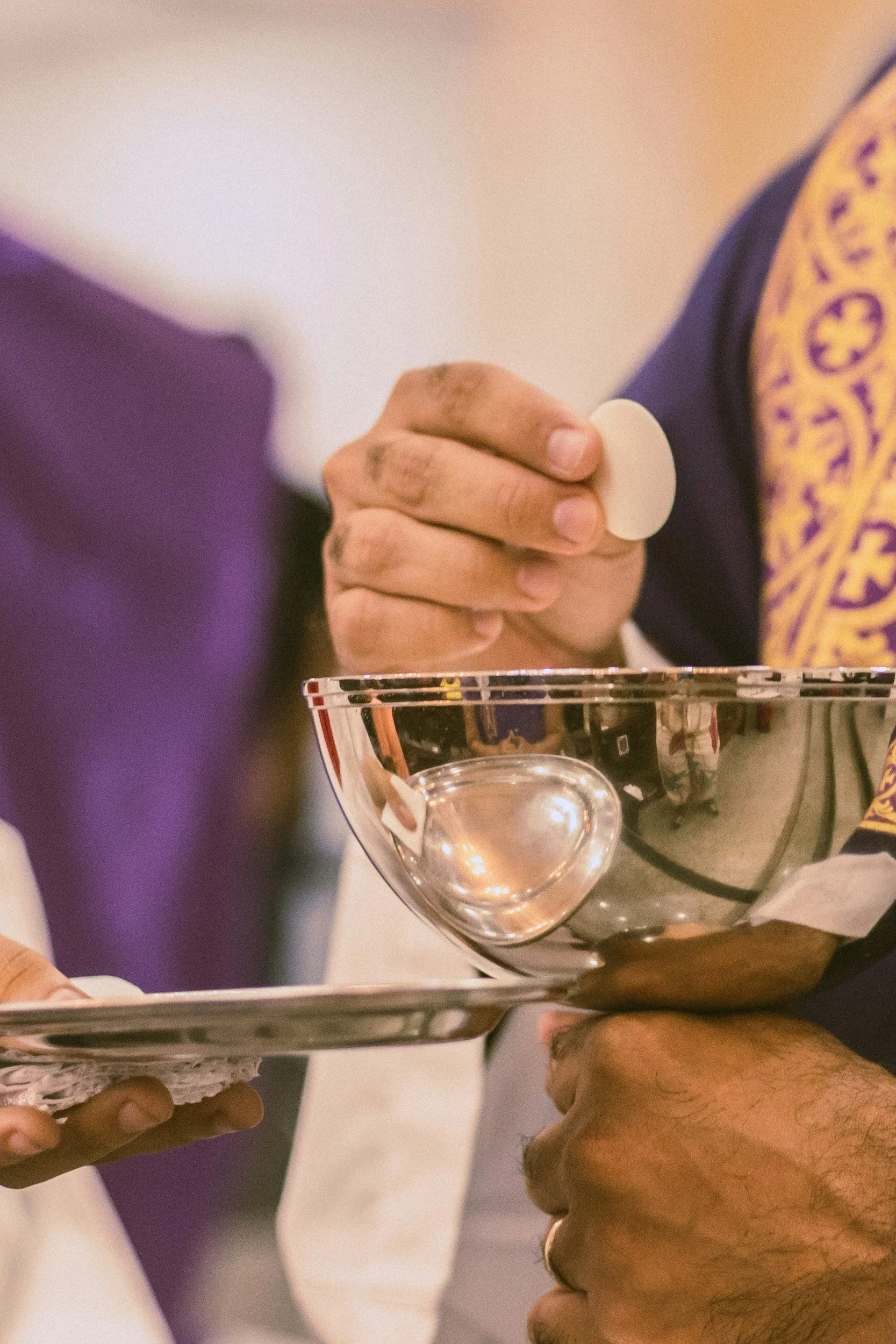
Take communion. Christians around the world gather every week to share bread and wine — simple, everyday things — that become, depending on your tradition, something holy. Something transformative. And yeah, it might sound strange when you describe it that way, but look past the theology for a second. What's actually happening is a room full of people sharing the same food, saying the same words, making the same gestures together. That kind of thing binds people. It always has.
The Jewish Passover Seder works the same way, but with an extra layer that I find really fascinating. The foods on the table aren't just symbols — they're meant to transport you. The bitter herbs aren't a garnish, they're the taste of slavery. The matzo isn't just bread, it's the bread of people who fled so fast it didn't have time to rise. You're not remembering history at that table. You're supposed to feel like you're in it. That's powerful stuff.
The Filipino Table Has Always Known This
Here in the Philippines, the connection between food and the sacred is something you grow up breathing. You might not even think of it as ritual — it just feels like life. But it is ritual, through and through.
Think about Undas. Every year, Filipino families pack up food and head to the cemetery to spend the day with their dead. And I mean really spend the day — eating, laughing, telling stories, right there beside the graves. To outsiders this might look unusual. But what it's really saying is: death doesn't end this relationship. You're still family. Here, have some food.
Or think about the handaan — the feast that shows up at every baptism, every fiesta, every funeral, every wedding. There's always a lechon somewhere, golden and gleaming, surrounded by more food than anyone could possibly finish. That abundance isn't accidental. It's generosity as a spiritual act. To feed people lavishly is to honor them, to honor the occasion, and in the context of a fiesta, to honor the patron saint watching over the whole thing.
And then there's something as simple as pasalubong — bringing food home for people when you've been away. It seems like a small thing. But it's really about saying: I was gone, but I was thinking of you. Food as proof of love across distance.
Even the phrase "kain na" — come eat — carries more weight than its two words suggest. It's an invitation, yes, but it's also a welcome. A way of saying you belong here, at this table, with us. In Filipino culture, offering food is one of the most natural ways of expressing care, and refusing it can feel like turning away something much bigger than a plate of rice.
So What's Actually Going On Here?
Anthropologists have a term for the feeling you get during shared rituals — that sense of being lifted out of your individual self and into something larger. Durkheim called it "collective effervescence." It sounds fancy but you already know exactly what it feels like. It's the warmth of a crowded Christmas table. It's eating beside your lola's grave and somehow feeling like she's still there. It's the moment the lechon gets carved and everyone surges forward together.
Sacred meals do two things at once. They connect you to something beyond — god, ancestors, the universe, whatever you believe in. And they connect you to the people sitting right beside you. Same food, same gestures, same table. That's how identity gets built. That's how communities survive.
We talk a lot about what we eat these days — organic, plant-based, sustainable, local. All important conversations. But we don't always talk about why we eat together, and what that togetherness actually does to us.
The answer, it turns out, has been sitting at the table all along.